
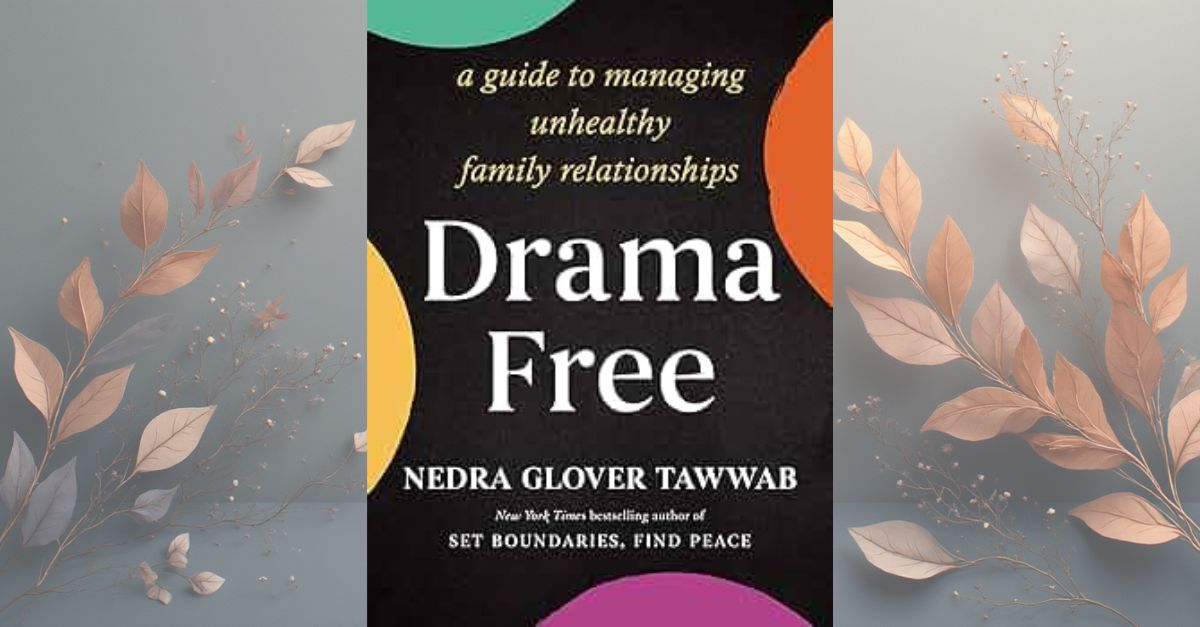
Drama Free:
A Guide to Managing Unhealthy Family Relationships by Nedra Glover Tawwab
Shop on Amazon →The Drama Free Workbook:
Practical Exercises for Managing Unhealthy Family Relationships by Nedra Glover Tawwab
Shop on Amazon →Drama Free offers a practical, therapist-grounded roadmap for identifying family dysfunction, setting boundaries, and reducing relational reactivity. It emphasizes clear skills you can adapt to culturally diverse clients and family systems.
Summary
Nedra Glover Tawwab breaks down how family patterns form, why they persist, and what concrete steps people can take to reduce ongoing conflict and emotional harm. The book centers on recognizing dysfunctional patterns, establishing and enforcing boundaries, and building healthier communication habits, all presented with case examples and actionable exercises for readers.
Tawwab frames dysfunction broadly (not only abuse but also neglect, gossip, enmeshment, and boundary violations) and offers tools to reclaim agency within family systems.
Why this matters for culturally informed counselling
Tawwab’s approach is skills-based and adaptable, which makes it useful across cultural contexts where family roles, obligations, and communication norms vary. The book’s emphasis on patterns rather than pathologizing individuals helps clinicians avoid culturally biased judgments and instead focus on relational dynamics and power imbalances. That orientation supports respectful, context-sensitive interventions that honor cultural values while protecting client wellbeingShortform.
Key takeaways for culturally informed counsellors
- Assess family norms before prescribing change. Ask how cultural expectations shape roles, obligations, and acceptable boundaries; what looks like “enmeshment” in one culture may be normative in another.
- Prioritize safety and power dynamics. Distinguish between culturally sanctioned behaviors and coercive or abusive patterns; safety always takes precedence over cultural deference.
- Teach boundary skills as culturally flexible tools. Frame boundaries as relational skills that can be negotiated rather than rigid rules; offer language and scripts that fit clients’ cultural communication styles.
- Use concrete, behavior-focused interventions. Tawwab’s exercises (e.g., scripts, small experiments, escalation plans) translate well into therapy homework and role-plays across cultures.
- Build support beyond family when needed. Encourage community, chosen family, and culturally relevant supports when biological family is harmful or unavailable.
Practical interventions and clinician prompts
- Culturally adapted scripting: Co-create boundary scripts that use culturally appropriate honorifics, indirectness, or collective framing when needed.
- Small-step experiments: Design low-risk boundary tests (e.g., limiting a topic at a family meal) and debrief outcomes.
- Power mapping: Explore who holds decision-making power in the family and how that affects safety and change.
- Psychoeducation: Normalize transgenerational patterns and provide language that reduces shame while validating cultural loyalties.
Limitations and cautions
Do not assume universality. Tawwab’s tools are practical but require cultural tailoring; clinicians must avoid imposing Western individualist values and remain attentive to client safety, immigration status, and community consequences of boundary work. Use the book as a skills toolkit, not a one-size-fits-all protocol.
Sources: Tawwab’s practical framework and examples informed this summary and clinical translation