
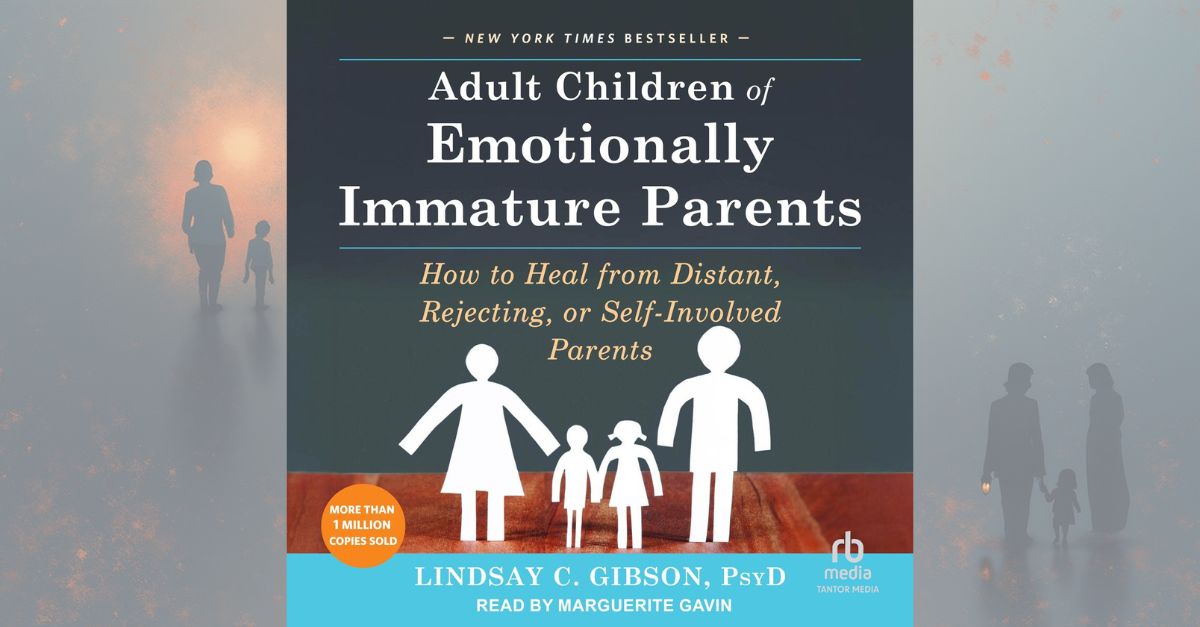
Adult Children of Emotionally Immature Parents
How to Heal from Distant, Rejecting, or Self-Involved Parents by Lindsay C Gibson
Shop on Amazon →This book explains how emotionally immature parenting shapes adult attachment, selfhood, and emotional regulation, and offers practical steps for healing. Below is a concise summary followed by culturally informed counselling takeaways you can apply in practice.
Book summary
Lindsay C. Gibson defines emotionally immature parents as caregivers who are self-focused, emotionally distant, or unpredictably reactive, leaving children with unmet emotional needs and a persistent sense of invisibility. The book maps how these parenting styles emotional neglect, enmeshment, and overcontrol, create predictable adult patterns:
-chronic people-pleasing,
-difficulty identifying feelings,
-and hypervigilance to others’ moods.
Gibson uses clinical examples and accessible language to show how these early dynamics produce long-term problems in intimacy, self-worth, and emotional regulation.
Gibson outlines practical healing steps: learning to identify and name one’s emotions, setting firm boundaries, reducing compulsive caretaking, and cultivating an internal “secure self” through consistent self-validation and small, repeated corrective experiences. She also offers guidance on managing relationships with parents who remain emotionally immature, shifting from hope for change to realistic limits and self-protective strategies.
Key takeaways for culturally informed counselling
1. Center cultural meanings of family and duty
- Assess cultural norms around filial obligation, interdependence, and respect for elders before labelling behaviours as “immature.”
- Work with clients’ values: reframe boundary-setting as a culturally congruent act (e.g., protecting family harmony by reducing reactivity).
2. Expand the definition of emotional neglect
- Recognize culturally specific expressions of emotional care (practical support, indirect affection, communal caregiving) and avoid imposing Western emotional norms as the only healthy model.
3. Use culturally adapted psychoeducation
- Translate Gibson’s concepts into culturally resonant language and metaphors (e.g., community roles, ancestral expectations) so clients can see how patterns formed without feeling pathologized.
4. Tailor boundary work to relational contexts
- Differentiate public vs private boundaries in collectivist settings; teach incremental boundary experiments that preserve essential social ties while reducing emotional harm.
5. Strengthen collective and relational resources
- Leverage extended family, faith leaders, and community elders as potential supports or safe mediators when appropriate, while maintaining client autonomy.
6. Attend to migration, trauma, and systemic stressors
- Contextualize emotional immaturity within socioeconomic hardship, migration stress, or intergenerational trauma. These factors shape caregivers’ capacity and must inform treatment plans.
7. Integrate somatic and narrative methods
- Combine emotion-naming with body-based practices and culturally meaningful storytelling to help clients reclaim agency and re-author their relational narratives.
8. Ethical humility and collaboration
- Practice cultural humility: co-create goals, invite client expertise about family norms, and adapt interventions rather than assuming one-size-fits-all solutions.
Practical next steps: begin sessions with a culturally framed family history, co-design 1–2 small boundary experiments, and use culturally meaningful metaphors to teach emotion identification and self-validation.